

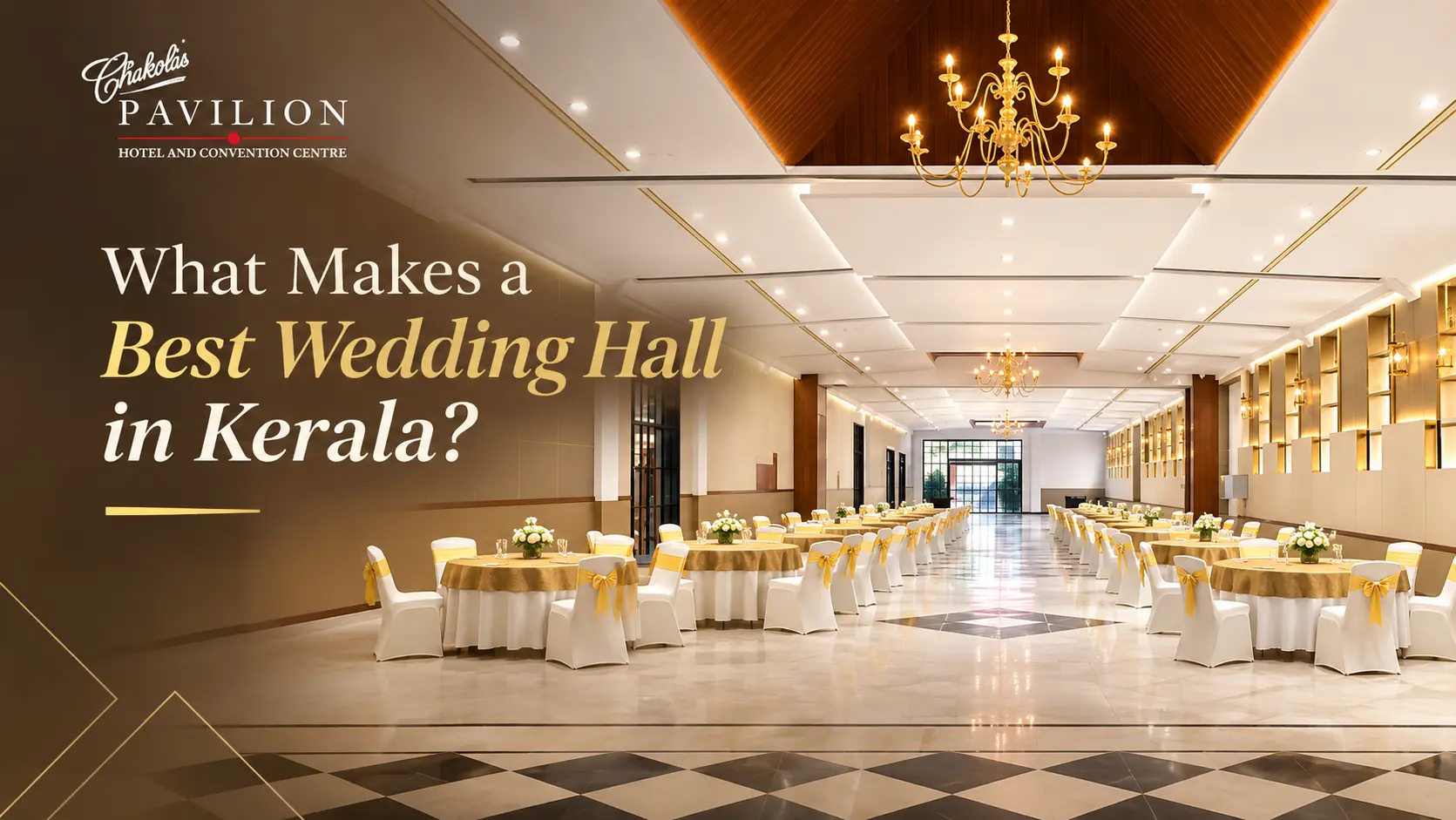
What makes a Best wedding hall in Kerala?
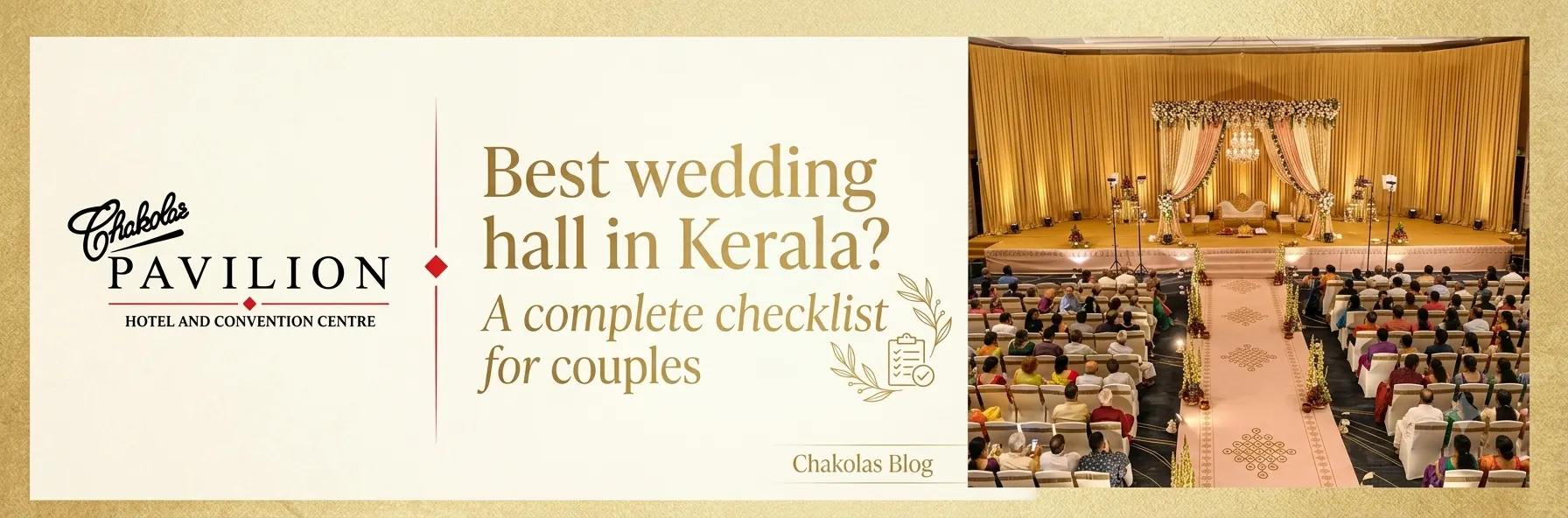
Planning a wedding in Kerala is one of the most joyful and logistically demanding experiences a family undertakes. Kerala weddings are not intimate affairs. They are grand, multi-day celebrations layered with tradition, cuisine, and community. And the venue carries a disproportionate share of the responsibility for how well everything comes together.
The right wedding hall does not just look beautiful in photos. It performs under the pressure of a thousand arriving guests, serves a seamless sadya, keeps your bridal party comfortable behind the scenes, and lets you be fully present in every moment because every detail is already handled.
This checklist covers everything you should look for before signing a booking contract for a wedding hall in Kerala.
Your Wedding Hall Checklist
1. Guest capacity: seating vs. dining, these are very different numbers
The first question most couples ask is: “How many guests can it hold?” But there are actually two distinct numbers that matter, and most venues only tell you one.
Seating capacity refers to how many chairs fit in the hall for a reception or ceremony. Dining capacity refers to how many guests can be seated and served a full meal at one time. For a traditional Kerala sadya with long banana-leaf rows, the dining capacity is often significantly lower than the seating capacity.
- What is the maximum seating capacity for a reception-style setup?
- What is the dining capacity for a sit-down sadya?
- Can both happen simultaneously in different spaces on the same property?
A venue that accommodates 1500 guests for a ceremony may only comfortably serve 400 at a time for sadya. If your guest list is 1200 and you are planning a sadya, you need a hall with enough total space to run multiple sittings or parallel dining areas without chaos.
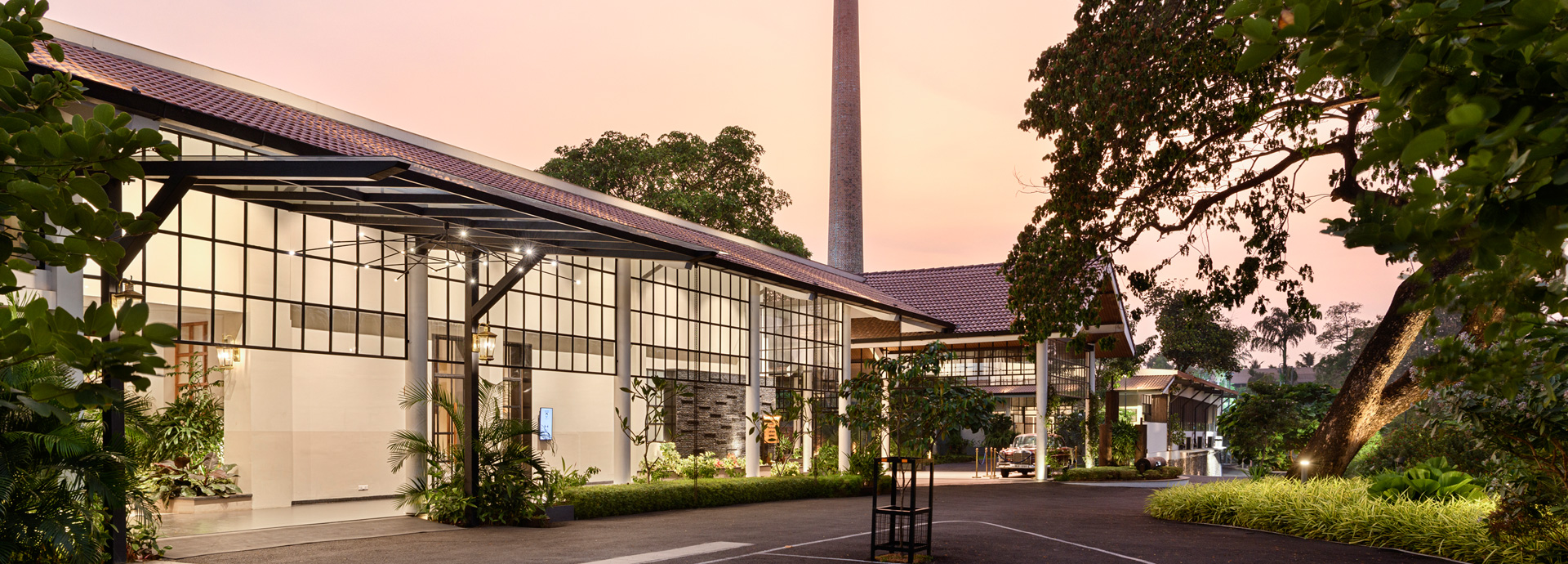
At Chakolas Pavilion, our Kochi property spans 44,500 sqft across multiple halls and can host 2,500 guests across five indoor venues and outdoor lawns simultaneously with enough space to run dining in one hall while the reception continues in another. Our Thrissur property’s Arena and Upper Circle offer 16,000 sqft of event space with a large pre-function area, designed to handle exactly this kind of multi-zone event management at scale.
2. Guest flow: how guests move through the venue matters more than size
A hall can be enormous and still feel chaotic on the wedding day. The reason is usually poor guest flow the path guests travel from arrival to greeting the couple on stage, to being seated, to dining, and finally to departure.
At a large Kerala wedding, three moments create peak pressure:
Arrival & Greeting
Guests queuing to reach the stage during the first hour
Sadya Rush
Hundreds of guests moving into the dining hall simultaneously
Departure
Guests exiting while new guests are still arriving
A well-designed wedding venue in Kerala has wide corridors and pre-function areas that absorb these surges. It separates the ceremonial space from the dining space so neither crowd blocks the other. The entrance should be grand and spacious, not a narrow funnel.
When you visit any wedding hall in Kerala before booking, walk the guest journey yourself. Enter as a guest, walk toward the stage, then walk toward where the dining will be. If it feels crowded with just you and the venue manager, imagine it with 1,000 people.
3. Parking: the problem most couples discover too late
Parking is one of the most overlooked factors in choosing a wedding venue in Kerala and one of the most significant contributors to a poor guest experience.
A guest who arrives at your wedding and spends 45 minutes finding a parking spot has already had a frustrating experience before they have even greeted you. For weddings with 800 to 2,000+ guests arriving in a short window, inadequate parking creates queues on the access road, delays the arrival schedule, and causes unnecessary stress for the family.
Questions to Ask
- How many dedicated car parks does the property have?
- Is additional overflow parking available nearby?
- Is valet service offered?
- Is the access road wide enough for simultaneous arrivals and departures?
700
Dedicated Car Parks
350
Additional Parking on Request
2,500
Guest Capacity Support
Chakolas Pavilion Kochi offers 700 car parks within the property, with an additional 350 available on request through the neighbouring Chakolas spinning and weaving mills compound. Valet services and additional security can also be arranged. For a venue hosting 2,500 guests, this is the kind of infrastructure that makes the difference between a smooth arrival experience and a logistical headache.
4. Indoor vs. outdoor: the Kerala climate question every couple must answer
Kerala is beautiful. It is also one of the wettest states in India, with two distinct monsoon seasons that can bring heavy rain even outside the peak June–September window.
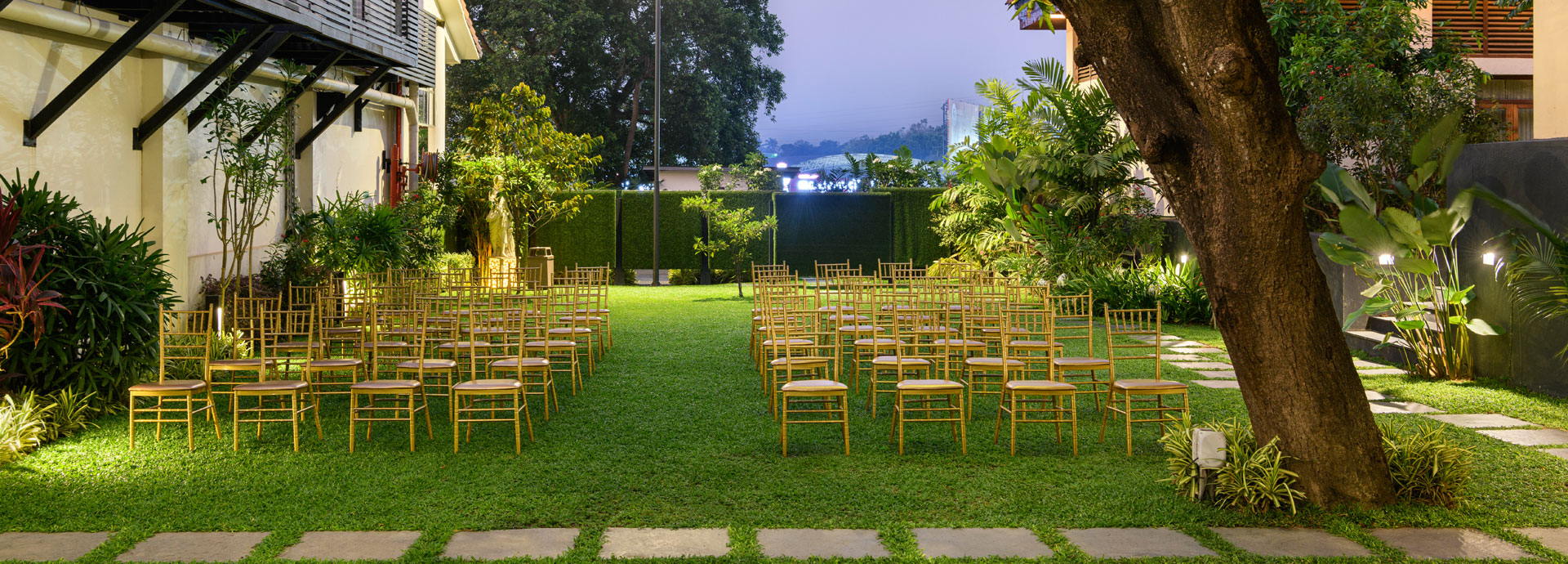
Outdoor lawn weddings in Kerala look breathtaking in good weather. But they carry inherent risk: a sudden afternoon shower mid-reception, mosquitoes at dusk, and heat during a morning ceremony can all significantly affect your guest experience.
The safest and most practical approach for large weddings in Kerala is a venue that offers both a primary indoor hall with the capacity to host your entire guest list, complemented by optional outdoor spaces for pre-function gatherings, evening cocktails, or smaller functions.
This gives you the best of both worlds: the visual grandeur of outdoor celebration when the weather cooperates, with full indoor backup that never compromises your event.
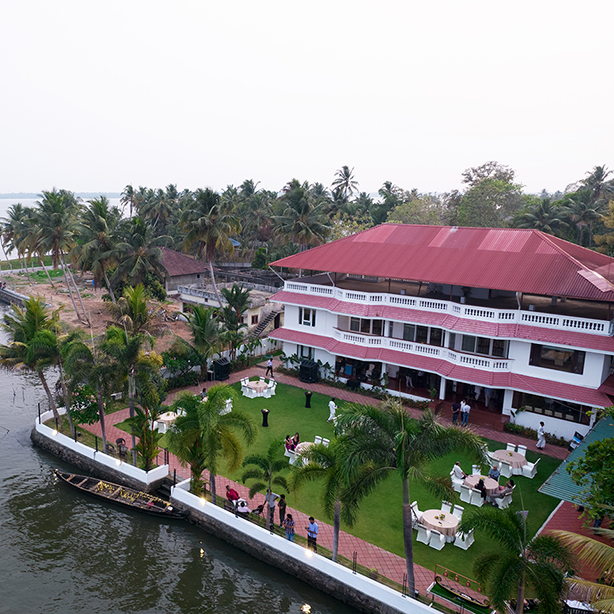
At Chakolas Pavilion, both our Kochi and Thrissur properties are designed with this in mind. The primary halls are fully air-conditioned and weather-proof. Outdoor spaces like the Promenade (8,000 sqft, 700 PAX capacity) and Prive Gardens in Kochi, and the landscaped areas in Thrissur, complement the indoor venues without depending on them.
5. Catering: in-house vs. external and why it matters for a Kerala wedding
Food is not a secondary consideration at a Kerala wedding. It is often the most discussed element among your guests long after the event. And for multi-day celebrations with multiple cuisine formats a sadya on one day, a North Indian dinner on another, perhaps a Continental breakfast spread the culinary consistency and quality must be maintained across every meal.
There are two models to evaluate:
In-house catering
The venue’s own kitchen team manages all food. The advantage is coordination the catering team knows the venue’s layout, service timing, and capacity. A strong in-house kitchen can customise menus, manage multiple cuisine formats simultaneously, and ensure quality control from cooking to serving.
The risk is when the in-house team is not genuinely excellent because you cannot simply swap them out.
External catering
You bring your own preferred caterer into the venue. This gives you more control over cuisine choices and may be ideal if you have a trusted family caterer. The downside is logistics: the external team needs to navigate a new kitchen, loading areas, and service setup on your wedding day.
Questions to Ask About Catering
- Can the kitchen handle multiple cuisine styles simultaneously?
- What is the maximum number of guests you can serve per sitting?
- If using in-house catering, can we customise the menu?
- Are outside caterers permitted, and what are the conditions?
At Chakolas Pavilion, food is treated as central to the celebration, not an add-on service. Every menu is individually curated our team takes time to understand the specific tastes, preferences, and cuisine combinations your guests will love. Our chefs are selected for mastery across Kerala sadya, North Indian, Mughlai, Continental, Chinese, and live counter formats. Across every multi-day celebration, no cuisine or flavour profile is repeated so every meal feels fresh and anticipated.
8. Décor flexibility and hall neutrality
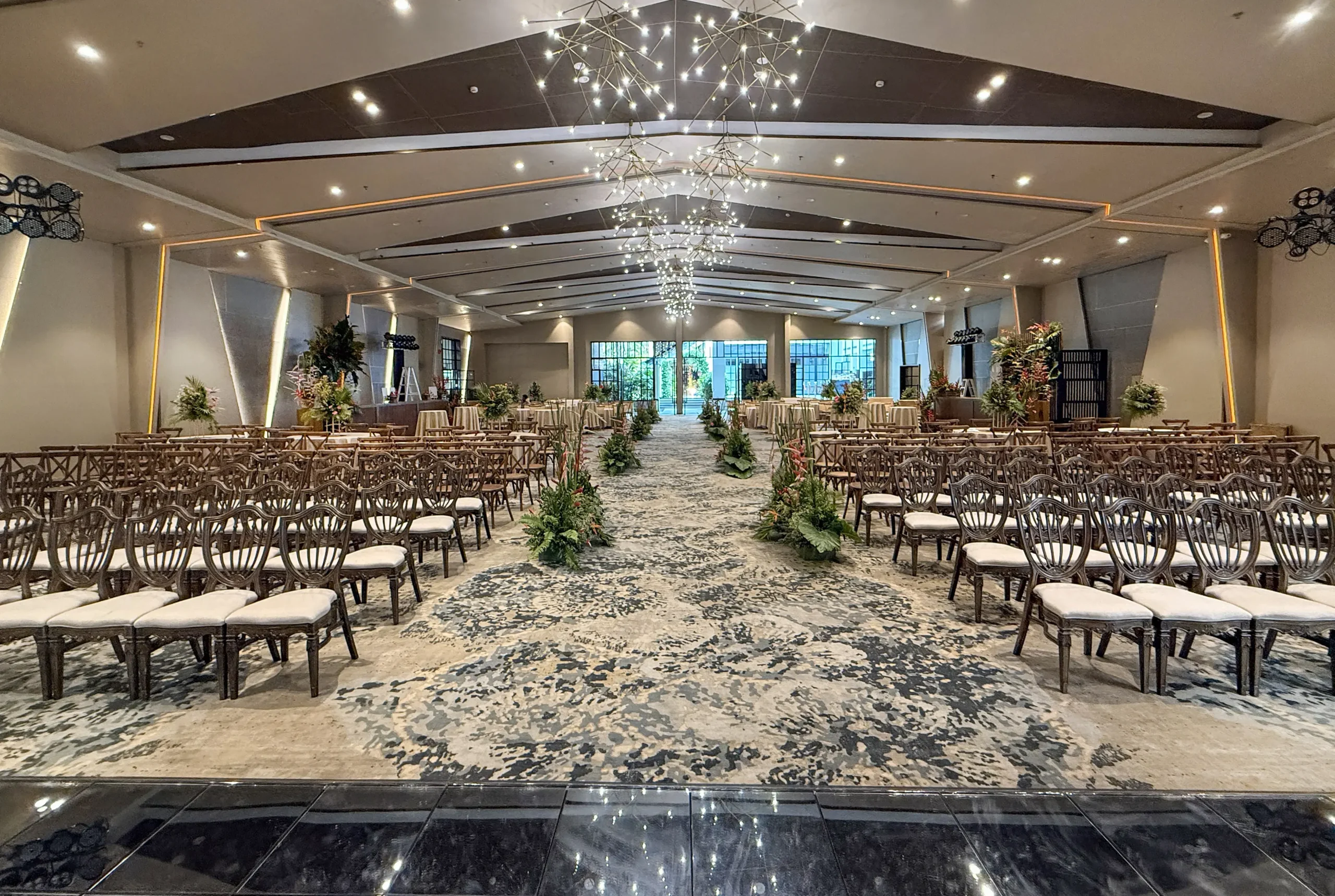
The best wedding halls in Kerala are visually elegant on their own but neutral enough to carry any décor theme, from traditional Kerala floral arrangements to contemporary luxury setups.
Beware of halls with very specific architectural features, strong existing colour schemes, or permanent stage designs that limit your decorator’s vision. A pillar-free layout is particularly important: pillars break sightlines, obstruct photography, and limit the flexibility of décor placement.
Why Pillar-Free Design Matters
- Pillars break sightlines
- Pillars obstruct photography and videography
- Pillars restrict décor flexibility
- Open layouts improve guest experience
Chakolas Pavilion’s Grand Ballroom in Kochi is pillar-free with double-height ceilings and decorative chandeliers that add grandeur while remaining neutral for any wedding aesthetic. The Galleria’s vintage-themed interiors complement traditional Kerala wedding décor particularly well, and its adjacent garden adds a natural outdoor element.
9. Vendor coordination and event management support
Your wedding involves dozens of vendors: florists, photographers, videographers, caterers, entertainers, sound and lighting teams, and more. On the wedding day, someone needs to coordinate all of these people within the venue — and that person should ideally be a professional who knows the space intimately.
When evaluating a wedding hall in Kerala, ask:
- Does the venue provide a dedicated event coordinator?
- Are there preferred vendor lists or restrictions on external vendors?
- What is the policy on sound and lighting setups are AV systems in-house or external?
- What is the loading and setup schedule for vendors the day before?
At Chakolas Pavilion, we see ourselves as experience partners, not just venue providers. Our team works with you and your vendors from planning through execution so that on the day itself, you are not troubleshooting logistics. You are celebrating.
10. The final question: can this venue handle the worst-case scenario?
The last item on any wedding hall checklist in Kerala is the simplest, and the most revealing.
Imagine your worst-case scenario: it rains heavily during the outdoor function. Three hundred more guests arrive than expected. The power goes out briefly. A vendor is late. Ask the venue manager directly: “What happens in each of these cases? Walk me through it.”
The Most Important Question to Ask
“What happens in each of these cases? Walk me through it.”
How a venue answers this question tells you everything about their experience, preparation, and professionalism. A venue that has handled 500 weddings will have a calm, specific answer. A venue that has handled 5 will pause.
Chakolas Pavilion has been purpose-built for exactly the scale and complexity of large Kerala weddings. Our infrastructure, team, and experience are designed not just for the perfect day but for the day that throws you a surprise at 11am and you don’t even notice, because everything has already been handled.